BIGSTORY Network


Defence Feb. 23, 2026, 11:22 p.m.

From Missiles to Cyber-Hacks: Inside India's New "PRAHAAR" Anti-Terror Blueprint

India launches the dual-track "Prahaar"—a tactical ballistic missile and a massive new anti-terror doctrine targeting cyber, drone, and cross-border threats. Inside the 2026 security overhaul.

by Author Brajesh Mishra
Hero Image

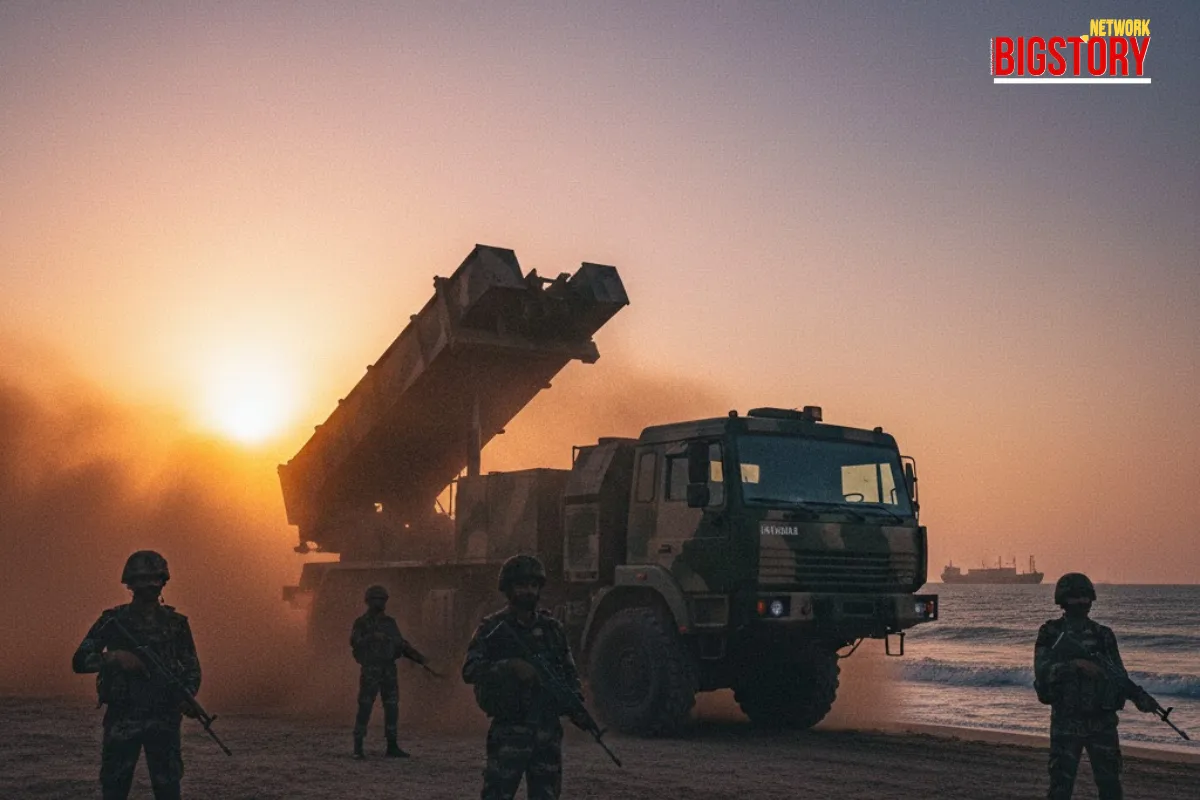
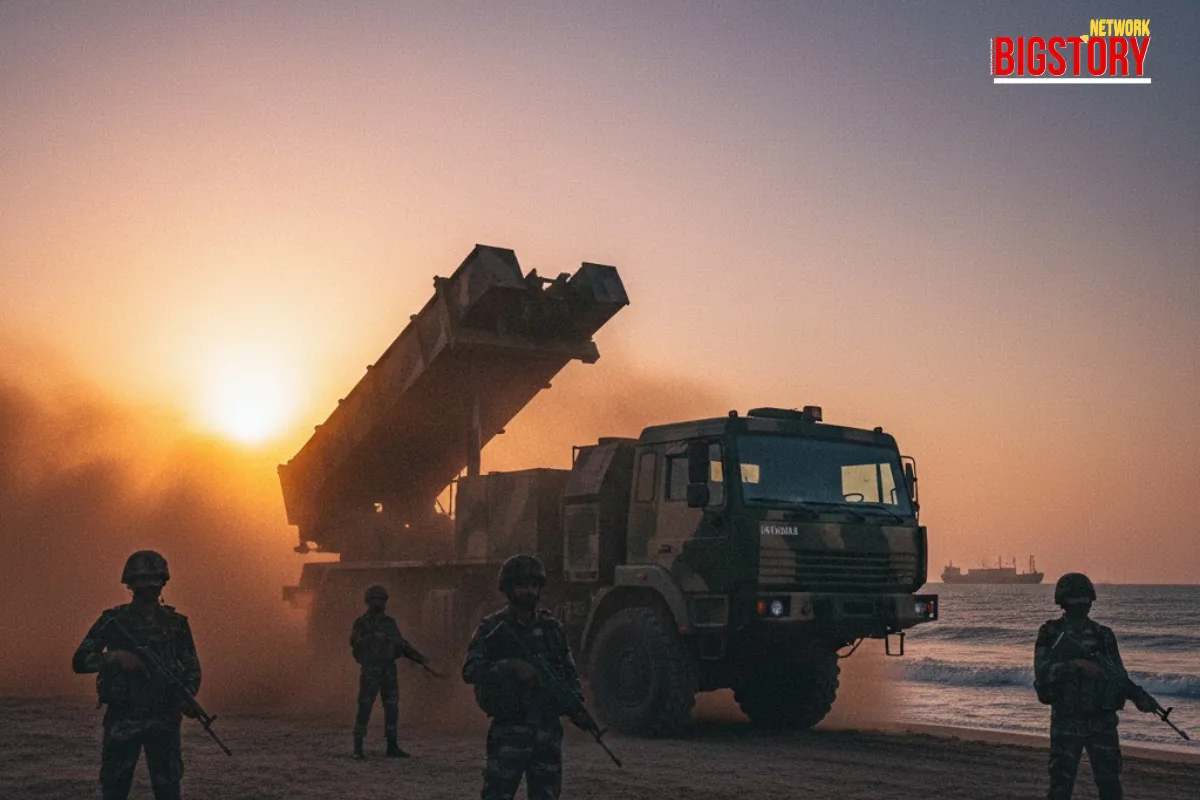
It is rare for a nation to redefine its internal and external security apparatus on the exact same day, but on Monday, India did just that. In a synchronized display of hard power and policy reform, New Delhi unveiled the "PRAHAAR" anti-terror doctrine while simultaneously validating the devastatingly precise Prahaar tactical missile from the Integrated Test Range in Odisha.

This matters because it signals the end of India's era of strategic patience. For decades, India's anti-terror response has been fragmented—handled differently by state police, central agencies, and the military. The newly published PRAHAAR doctrine forces a "whole-of-government" standardization to neutralize 21st-century threats, specifically targeting cross-border sleeper cells, weaponized drones, and state-sponsored cyber-attacks. When paired with a 150-km range tactical missile designed to obliterate battlefield targets with pinpoint accuracy, the message to adversaries is unmistakable: the capability to strike back is now instant, integrated, and absolute.

The "BigStory" Angle (The "Doctrine of Naming" & AI)

Mainstream media is treating the missile launch and the policy document as two separate news items. They are completely missing the Doctrine of Naming.

By deliberately naming both the tactical missile and the overarching anti-terror framework "Prahaar" (Strike), the government is engineering a unified psychological brand. This is the doctrine of "Active Deterrence." It is designed to embed the concept of an unavoidable, precise counter-strike into the minds of terror handlers, whether they are launching a physical drone over Punjab or a digital ransomware attack on Mumbai's power grid.

Furthermore, the new MHA document officially integrates Artificial Intelligence into internal security. The PRAHAAR doctrine outlines a mandate for central agencies to deploy AI-driven pattern recognition software to scan digital footprints, identifying "radicalization pathways" and mapping out sleeper cells in real-time before an attack can physically materialize.

The Context (Rapid Fire)

  • The Trigger: Following a series of evolving threats—including the weaponization of commercial drones and advanced cyber-espionage—the MHA sought to unify the nation's scattered anti-terror protocols.
  • The Backstory: The Prahaar missile system has been in development as a crucial gap-filler between the Pinaka multi-barrel rocket launchers and the larger Prithvi ballistic missiles, designed for high acceleration and maneuverability.
  • The Escalation: The MHA's upload of the PRAHAAR document on Monday morning was perfectly choreographed to align with evening reports confirming the missile's successful terminal impact of less than 10 meters off the Odisha coast.

Key Players (The Chessboard)

  • Amit Shah (The Architect): The Union Home Minister pushed the PRAHAAR doctrine through, declaring that a standardized, synergistic response is the only way to tackle modern, multi-domain terrorism.
  • Dr. Samir V. Kamat (The Innovator): The DRDO Chairman oversaw the technical refinement of the Prahaar missile, delivering a highly mobile, solid-fueled battlefield asset to the armed forces.
  • G. Kumar (The Implementer): The Secretary of Internal Security is now tasked with the massive logistical hurdle of forcing state agencies and central bureaus to adopt the PRAHAAR protocols seamlessly.

The Implications (Your Wallet & World)

  • Short Term (Digital Professionals): If you work in IT, data security, or even high-level gaming networks, review the "Cyber-Security Guidelines" section of the PRAHAAR doctrine immediately. It introduces stringent new, legally binding protocols for reporting "Nation-State" hacking attempts and data breaches.
  • Long Term (State Governments): The clock is ticking. State governments have been given a strict 90-day deadline to upgrade and align their local Anti-Terror Squads (ATS) with the new national PRAHAAR standards, which will require massive immediate budget allocations.

The Closing Question

The PRAHAAR doctrine officially introduces AI surveillance to proactively hunt down digital radicalization and sleeper cells. Does this make the country significantly safer, or does it risk crossing the line into mass civilian surveillance? Tell us in the comments.

FAQs

  • Q: What is the PRAHAAR anti-terror doctrine released by MHA?
  • A: It is India's newly released, comprehensive internal security framework designed to standardize the national response across all state and central agencies against terrorism, drone threats, and cyber-attacks.
  • Q: Is Prahaar a missile or a policy?
  • A: It is both. "Prahaar" is a Short-Range Ballistic Missile (SRBM) developed by DRDO, and "PRAHAAR" is also the name of the new overarching anti-terror doctrine released by the Ministry of Home Affairs in February 2026.
  • Q: What are the key features of the Prahaar Short-Range Ballistic Missile?
  • A: The Prahaar missile has an operational range of 150 km, carries conventional warheads, and boasts a highly precise terminal accuracy (CEP) of less than 10 meters, making it a highly lethal tactical battlefield weapon.
  • Q: How will the PRAHAAR doctrine tackle drone and cyber threats in India?
  • A: The doctrine mandates the use of AI-driven pattern recognition to detect digital radicalization and sleeper cells, establishes uniform protocols for neutralizing weaponized drones, and enforces strict national reporting guidelines for cyber-breaches.

Sources:


Brajesh Mishra
Brajesh Mishra Associate Editor

Brajesh Mishra is an Associate Editor at BIGSTORY NETWORK, specializing in daily news from India with a keen focus on AI, technology, and the automobile sector. He brings sharp editorial judgment and a passion for delivering accurate, engaging, and timely stories to a diverse audience.

BIGSTORY Trending News! Trending Now! in last 24hrs

From Missiles to Cyber-Hacks: Inside India's New "PRAHAAR" Anti-Terror Blueprint
Defence
From Missiles to Cyber-Hacks: Inside India's New "PRAHAAR" Anti-Terror Blueprint
10 Soldiers Dead in Doda: Army Vehicle Plunges Into Gorge
Defence
10 Soldiers Dead in Doda: Army Vehicle Plunges Into Gorge
SHANTI Bill Passed: India Ends 60-Year Nuclear Monopoly
Defence
SHANTI Bill Passed: India Ends 60-Year Nuclear Monopoly
"Seven Sisters" Threat Triggers Shutdown: Why India Closed Its Dhaka Centre
Defence
"Seven Sisters" Threat Triggers Shutdown: Why India Closed Its Dhaka Centre